How to Build a Corporate Wellness Challenge That Keeps People Involved
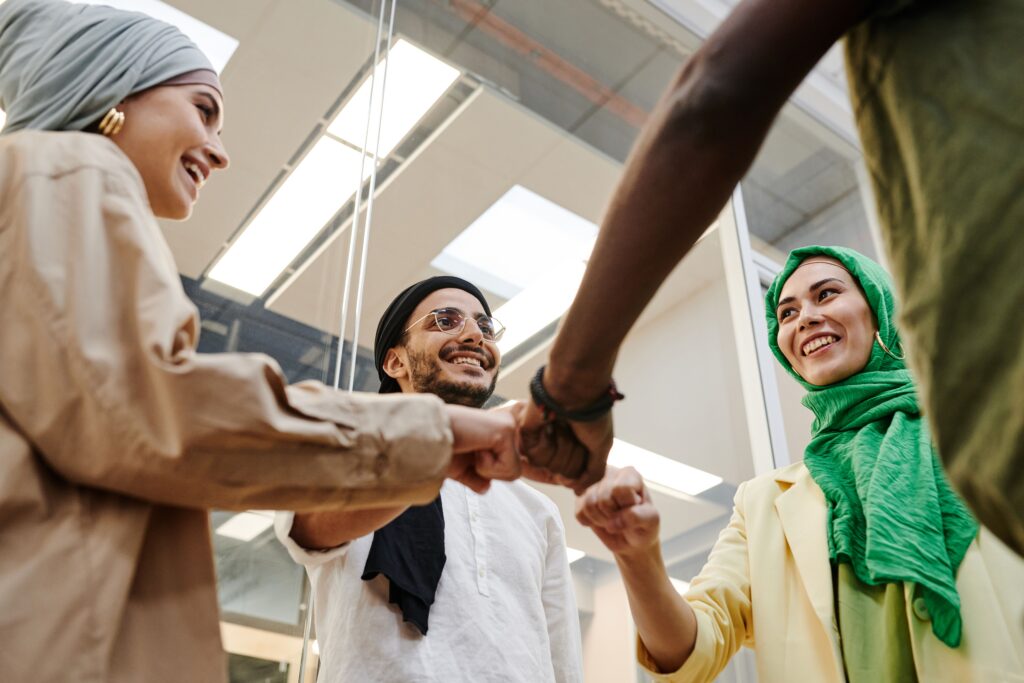
A challenge can create something that many workplace wellbeing initiatives struggle to achieve: a reason for employees to participate together.
People can walk, move, complete activities, track progress, encourage teammates, and work toward a shared goal over several weeks. For HR, that creates opportunities for both employee wellbeing and team engagement.
The format is particularly relevant in the UAE this year.
Dubai Fitness Challenge returns for its tenth edition from October 31 to November 29, 2026, inviting people across Dubai to complete 30 minutes of physical activity every day for 30 days. More than 16 million participants have taken part across its first nine editions.
For companies, a citywide initiative like this creates a natural opportunity to get employees moving together.
But launching a corporate wellness challenge and keeping employees engaged in one are two different things.
A 2025 systematic review of workplace physical activity programs found that employee adherence remains a major limitation. The review identified factors at three levels: the individual employee, the design of the intervention, and the organization itself. It also found evidence that participation can decline as programs continue.
So before creating the leaderboard, prizes, and launch announcement, HR needs to think about the experience employees will have from beginning to end.
Start With a Challenge People Can Realistically Join
A corporate fitness challenge can unintentionally become a challenge for the employees who are already active.
The regular runner starts near the top of the leaderboard. The employee who walks every evening performs well. Someone who already tracks their workouts knows exactly what to do.
Then there is everyone else.
Employees may have different fitness levels, health considerations, working arrangements, schedules, ages, abilities, and levels of confidence around exercise.
A challenge designed around one demanding target can make participation feel unrealistic before some employees have even started.
Recent research reinforces the importance of this distinction. The 2025 systematic review found that employees’ baseline physical activity, health, and motivation can influence adherence, while individualization of the intervention was another important factor.
That gives HR a practical design principle:
Create more than one way to make progress.
Instead of rewarding only the person with the highest number of steps, a challenge could recognize:
- Individual progress
- Team progress
- Consistency
- Participation
- Personal milestones
- Improvement from an individual starting point
- Completion of different activities
This gives more employees something meaningful to work toward.
Decide What You Want the Challenge to Achieve
A step challenge and a broader employee engagement challenge can look similar on the surface while serving different purposes.
Your objective might be to increase movement.
It might be to encourage healthier habits.
You may want employees from different teams to interact.
You may be looking for an accessible company-wide activity during Dubai Fitness Challenge.
Or the challenge may form part of a wider corporate wellness program.
Clarifying the objective influences almost every decision that follows.
If movement is the goal, steps, active minutes, or completed activities may be useful measures.
If connection is important, a team-based format could make more sense.
If participation is the priority, you may want to recognize consistency rather than rewarding the highest performer.
If habit-building is the goal, the challenge may need to run long enough for employees to practice the behavior repeatedly, with communication and activities supporting them along the way.
Start with the outcome. Then design the mechanics around it.
Give Employees More Than One Way to Move
Steps are popular because they are relatively easy to understand and track.
They are not the only form of physical activity.
Cycling, swimming, strength training, yoga, fitness classes, and other forms of movement may be part of employees’ routines. A challenge can consider how different activities will be recognized, provided the tracking method remains clear and fair.
This is particularly useful for diverse workforces.
Someone who enjoys cycling should not necessarily have to replace it with walking simply because the workplace challenge counts steps. An employee with mobility limitations may need another appropriate way to participate.
The goal is to make the challenge accessible without making the scoring system impossible to understand.
Keep the rules simple enough that employees know what counts, how progress is recorded, and what they are working toward.
Use Competition Carefully
Competition can make a challenge fun.
It can also narrow participation if the same highly active employees dominate from the first week.
Leaderboards are therefore a design choice, rather than the challenge itself.
You could have individual rankings, team rankings, department challenges, milestone achievements, consistency awards, or collective company goals.
You could also combine them.
For example, employees might see a team leaderboard while the organization simultaneously works toward a shared company target. Individual achievements could then recognize milestones rather than only ranking the highest performers.
A recent qualitative study of employees participating in a workplace step challenge described a model that combined personal progress with team and wider leaderboards, while allowing activities including running, cycling, swimming, and yoga to contribute through converted step equivalents.
There is no single format that will work for every organization.
The question is what kind of behavior your competition encourages.
If only the top three people can realistically win, employees who fall behind early may have little reason to continue competing.
If employees can contribute to a team, reach personal milestones, or help the entire company reach a shared target, there are more reasons to stay involved.
Make Progress Visible
A challenge becomes harder to follow when employees have no idea how they are doing.
Progress can be made visible through an app, dashboard, weekly update, team tracker, or another system appropriate to the organization.
The information does not need to be complicated.
Employees may simply need to see:
- Their own progress
- Their team’s progress
- How much time remains
- The next milestone
- The organization’s collective progress
- New activities or opportunities to participate
A 2026 UAE workplace wellness study offers a relevant example. Researchers evaluated a 12-week program among 116 employees of a UAE healthcare organization. The program used physical activity challenges alongside app notifications, reminders, progress dashboards, corporate challenges, and leaderboards. Participants could also choose between different activity targets during parts of the program. The study reported improvements in several physical health and fitness measures, although the findings come from one organization and should not be generalized to every workplace.
The example is useful because the challenge was supported by an ongoing participation system rather than relying solely on an initial announcement.
Planning a Corporate Wellness Challenge for Your Team?
Wellbayt helps companies run structured workplace challenges that bring employees together through movement, shared goals, progress tracking, and ongoing engagement.Challenges can be delivered as focused company initiatives or as part of a broader corporate wellbeing program.
Plan for the Middle of the Challenge
The first few days are usually the easiest part to promote.
The challenge is new. Employees are curious. Communications are fresh. Teams are starting to compare progress.
Then the novelty begins to fade.
This is where the participation strategy matters most.
The 2025 systematic review found that adherence can decrease over the course of workplace physical activity interventions. It also identified management support, work organization, social support, and workload among factors associated with adherence.
HR should therefore plan the middle of the challenge before launch day.
That might include a new team goal, a midway activity, a progress update, an expert-led physical wellbeing session, a walking event, a new milestone, or recognition for employees who have remained consistent.
The communication should evolve too.
If every message says “keep going,” employees will eventually stop noticing it.
Share progress. Celebrate different achievements. Introduce something new. Give teams another reason to talk about the challenge.
Make Participation Fit the Working Day
A workplace challenge becomes difficult to sustain if participating requires employees to work around the workplace itself.
An employee with back-to-back meetings may struggle to fit in movement.
A frontline employee may not have the same freedom to take a walking break as someone working remotely.
Someone commuting long distances may have less discretionary time before and after work.
Workload matters too. The 2025 adherence review found that greater workload was negatively associated with adherence in studies that examined it. It also identified the working environment and management support as important organizational factors.
Companies can look for small ways to make participation more practical.
Teams could be encouraged to take walking meetings where appropriate. Employees might be given opportunities for short movement breaks. An office activation could contribute toward the challenge. Managers can participate themselves and make it clear that taking part during appropriate moments in the working day is acceptable.
If leaders promote a wellness challenge while employees feel they have no time to participate, the message becomes difficult to reconcile with their daily experience.
Be Thoughtful About Rewards
Prizes can generate attention, but they should not carry the entire challenge.
Research on financial incentives for workplace physical activity suggests incentives can increase physical activity in some contexts, but questions remain around sustaining behavior after incentives end. A 2024 systematic review found positive effects in several included studies while also highlighting substantial variation in study design and evidence quality.
This is another reason to think beyond a single grand prize.
Recognition can include:
- Team achievements
- Consistency milestones
- Personal progress
- Participation awards
- Department achievements
- Collective company milestones
Rewards can still be part of the experience.
They simply work alongside good challenge design rather than replacing it.
Keep Tracking Simple
Every additional step employees need to complete creates another opportunity to stop participating.
If someone has to record their activity manually in several places, remember complicated rules, submit screenshots, and wait for HR to update a spreadsheet, enthusiasm can disappear quickly.
Choose a tracking method that matches the complexity of the challenge.
A small organization running a short activity may only need a simple tracker.
A larger company running a month-long corporate fitness challenge may benefit from automated activity syncing, progress tracking, dashboards, and leaderboards.
Whatever system you choose, explain it before the challenge begins.
Employees should know how to join, what activity counts, how their progress is recorded, what others can see, and where to go if something does not work.
Measure More Than the Winner
The employee at the top of the leaderboard tells you very little about whether the challenge worked.
Look at participation across the entire workforce.
Useful measures can include:
Loading..........
The Data is Not Available
If 200 employees register and only 40 remain active by the end, the registration number alone gives HR an incomplete picture.
The drop-off itself is useful information.
Perhaps the challenge lasted too long. Maybe the scoring favored already-active employees. Communication may have disappeared after launch. Tracking could have been difficult. Workload may have affected participation.
Measurement gives you something to improve next time.
Connect the Challenge to Something Bigger
A corporate wellness challenge can stand alone.
It can also become an entry point into a wider employee wellbeing program.
A movement challenge could lead into sessions on physical wellbeing, nutrition, sleep, recovery, or sustainable habits. Employees who enjoyed team competition may respond well to future company-wide wellbeing initiatives. Participation data can help HR understand which formats generate interest across different parts of the workforce.
This is where challenges can become particularly useful.
They give employees something concrete to do while giving HR a way to observe participation, gather feedback, and learn what resonates.
Want to Understand What Your Workforce Needs Next?
Wellbayt's free Workforce Wellbeing Diagnostic helps HR teams assess current wellbeing priorities, employee engagement, workplace challenges, and areas where additional support may be useful.
Build the Challenge Around Participation Instead of Performance
A successful corporate wellness challenge does not need every employee to finish with the same result.
People start from different places.
What HR can create is an experience that gives more people a realistic opportunity to join, participate, make progress, and remain involved.
Set a clear objective. Make participation accessible. Give employees different ways to contribute. Keep progress visible. Plan for the point when initial excitement fades. Give managers a role. Measure what happens throughout the challenge.
Your workplace challenge can build on that momentum while creating an experience specific to your people.
Bring Your Next Corporate Wellness Challenge to Life
Wellbayt helps organizations design and deliver employee wellness challenges built around participation, movement, team connection, and measurable engagement.From challenge setup and employee communications to activity tracking, leaderboards, and engagement throughout the campaign, we can help you create an experience your team can take part in together.